

Choosing the right cooker for your kitchen is a crucial decision that impacts your cooking efficiency, meal quality, and overall kitchen experience. Whether you are a culinary enthusiast, a busy parent, or someone setting up your first home, the right cooker can make all the difference. With a wide range of options available in the market, from gas and electric to induction and dual-fuel cookers, understanding the key features and benefits of each type can help you make an informed decision.
In this comprehensive buying guide, we will walk you through the essential factors to consider when purchasing a cooker. We’ll explore the various types of cookers, their unique features, and the advantages they offer. Additionally, we’ll provide tips on assessing your cooking needs, kitchen space, and budget to ensure you select the perfect cooker that fits your lifestyle.
What is a Cooker
A cooker is a freestanding appliance that combines a hob (cooktop) and an oven in one unit. This versatile appliance caters to all your cooking needs, from boiling and frying on the hob to baking and roasting in the oven.
- Hob (Cooktop)
A cooktop (or hob in British English) is a flat cooking surface with burners or heating elements used for cooking food. It is a crucial component of a kitchen, providing a place to boil, fry, sauté, simmer, and perform various other cooking tasks. Cooktops can be standalone units or integrated into a range or oven. They come in different types, each offering unique features and benefits.
- Oven
An oven is an enclosed appliance used for baking, roasting, broiling, and sometimes steaming or grilling food. It’s a vital part of a kitchen, allowing for a wide range of cooking methods and recipes. Ovens come in various types, each suited to different cooking styles and kitchen setups.
Types of Cookers
- Freestanding Cookers:
- Description: All-in-one units that include both a hob and an oven.
- Features: Versatile, easy to install, and available in gas, electric, and dual-fuel models.
- Advantages: Simplifies installation, wide variety of options, and typically cost-effective.
- Disadvantages: Requires dedicated space, might not fit seamlessly into custom kitchen designs.
-
 Ariston 60/60cm Full Electric Cooker, Stainless Steel, AS67E4KHXUGX 2,750,000
 -
Product on sale
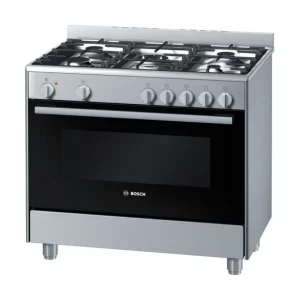 Bosch 90cm 5 Burner Freestanding Gas Range Cooker w/ Gas Oven, Grill, Rotisserie, HSG734357ZOriginal price was: UGX 5,750,000.UGX 5,450,000Current price is: UGX 5,450,000.
 -
Product on sale
 Electrolux 60x60cm Cooker; 4 Gas Burners, Electric Oven and Grill, Rotisserie, Auto Safety, Oven Fan, Stainless Steel, EKK6400Z9XOriginal price was: UGX 2,000,000.UGX 1,900,000Current price is: UGX 1,900,000.
- Built-in Ovens and Separate Hobs:
- Description: Ovens installed into cabinetry with separate hobs mounted on countertops.
- Features: Customizable kitchen layouts, choice of different hob types.
- Advantages: Seamless integration into kitchen design, flexibility in placement, and easy replacement of individual components.
- Disadvantages: Potentially higher installation costs, requires more planning in kitchen design.
-
Product on sale
 Hisense 60cm Ceramic Hob (HHU60CEEC)Original price was: UGX 780,000.UGX 590,000Current price is: UGX 590,000.
 -
![Bosch Serie 8 HBG634BB1B Built In Oven Electric 71 Litre A+ Energy [Energy Class A+]](https://www.abanista.com/wp-content/uploads/2022/05/hbg634-bb1b-300x300.jpg) Bosch Serie 8 HBG634BB1B Built In Oven Electric 71 Litre A+ Energy [Energy Class A+]UGX 4,650,000
Bosch Serie 8 HBG634BB1B Built In Oven Electric 71 Litre A+ Energy [Energy Class A+]UGX 4,650,000 -
Product on sale
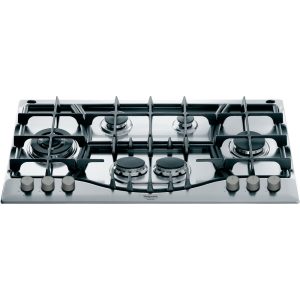 Ariston 90cm Built-in Gas Hob: 6 Gas Burners, Auto Ignition, Stainless Steel | PH 961 TS/IX/AOriginal price was: UGX 2,800,000.UGX 2,350,000Current price is: UGX 2,350,000.
- Range Cookers:
- Description: Larger units that combine multiple ovens with a hob, often featuring additional cooking methods like grills or griddles.
- Features: Large cooking capacity, versatile cooking options, and often a centerpiece in kitchen design.
- Advantages: Ideal for large families or frequent entertainers, multiple cooking methods, and robust construction.
- Disadvantages: Requires significant space, higher cost, and potential for higher energy use.
Hob Types
- Gas Hobs:
- Description: Use natural gas or propane, with visible flames.
- Features: Instant heat adjustment, visual control of flame size.
- Advantages: Quick temperature changes, versatile for different cooking techniques, and preferred by professional chefs.
- Disadvantages: Requires gas connection, potential safety risks with open flames, and may need more cleaning.
- Electric Hobs:
- Description: Use electric coils or smooth ceramic-glass surfaces.
- Features: Steady heat distribution, easier to clean smooth tops.
- Advantages: Simple to use, safer without open flames, and consistent heating.
- Disadvantages: Slower to heat and cool, less precise temperature control.
- Ceramic Hobs:
- Description: Type of electric hob with a smooth, glass-ceramic surface.
- Features: Radiant heating elements beneath the glass-ceramic surface.
- Advantages: Sleek design, easy to clean, quick heating of cooking zones, and residual heat indicators for safety.
- Disadvantages: Surface can be scratched or damaged by heavy cookware, slower to respond to temperature changes compared to gas or induction, and typically less energy-efficient than induction hobs.
- Induction Hobs:
- Description: Use electromagnetic fields to directly heat pots and pans.
- Features: Fast heating, precise temperature control, cool-to-touch surface.
- Advantages: Energy-efficient, very safe, and excellent temperature control.
- Disadvantages: Requires compatible cookware, higher initial cost, and might need specialized installation.
Oven Types
- Conventional Ovens:
- Description: Standard ovens that use radiant heat from elements at the top and bottom.
- Features: Available in gas or electric models.
- Advantages: Good for a variety of cooking methods, straightforward to use.
- Disadvantages: Potential for uneven heat distribution, especially in gas models.
- Convection Ovens:
- Description: Include a fan to circulate hot air.
- Features: Even cooking, reduced cooking times.
- Advantages: Superior heat distribution, energy-efficient, faster cooking.
- Disadvantages: More expensive, may require recipe adjustments.
- Steam Ovens:
- Description: Use steam for cooking, often combined with convection.
- Features: Moist cooking environment, preserves nutrients.
- Advantages: Healthy cooking, retains moisture and flavor, great for bread and delicate foods.
- Disadvantages: Expensive, requires water reservoir maintenance.
- Combination Ovens:
- Description: Combine microwave, convection, and sometimes grill functions.
- Features: Multifunctional, space-saving.
- Advantages: Versatile, fast cooking, and can perform multiple functions.
- Disadvantages: Smaller capacity, more complex to use.
Oven Fuel: Gas vs Electric
| Aspect | Gas Oven | Electric Oven |
|---|---|---|
| Heat Source | Uses gas fuel (natural gas or propane) with open flames. | Uses electricity to power heating elements (coils or elements). |
| Heat Distribution | Provides more even heat distribution throughout the oven. | Offers consistent and predictable heat distribution. |
| Preheating Time | Heats up quickly, typically faster preheating times. | Slower to heat up compared to gas ovens. |
| Temperature Control | May have less precise temperature control compared to electric ovens. | Offers precise temperature settings, ideal for baking. |
| Moisture Retention | Retains more moisture during cooking, beneficial for roasting. | Tends to produce drier heat, which may dry out some foods. |
| Installation Requirements | Requires a gas line connection; additional installation costs may apply. | Only requires a standard electrical connection. |
| Safety | Open flames pose potential safety risks; requires caution. | No open flames, generally considered safer, especially for households with children. |
| Energy Efficiency | Generally cost-effective in regions where gas is cheaper. | Electricity rates vary; may result in higher energy costs depending on usage. |
| Cleaning | Requires periodic cleaning of burners and gas lines. | Smooth interior surfaces and removable heating elements make cleaning easier. |
| Performance at Altitudes | Performs well at higher altitudes where oxygen levels are lower. | May experience performance issues at high altitudes affecting heating elements. |
| Cost | Initial cost can be lower; ongoing costs depend on gas prices. | May have higher initial cost; ongoing costs depend on electricity rates. |
Considerations:
- Baking Needs: Electric ovens offer precise temperature control, ideal for baking delicate items.
- Cooking Speed: Gas ovens heat up quickly and may cook faster, beneficial for busy kitchens.
- Safety: Electric ovens are safer due to the absence of open flames, making them suitable for households with children.
- Kitchen Setup: Consider availability of gas lines and ease of installation.
- Energy Efficiency: Compare energy costs based on local utility rates and appliance efficiency ratings.
Key Features to Consider
- Size and Capacity:
- Consider: Your kitchen space and cooking needs.
- Typical Sizes: 60cm, 90cm widths for standard cookers; larger for range cookers.
- Oven Capacity: Measured in liters, affects the amount of food you can cook at once.
- Energy Efficiency:
- Look for: Energy rating labels (A++ to D).
- Advantages: Lower energy bills, environmentally friendly.
- Controls and Interface:
- Types: Knobs, touch controls, digital displays.
- Features: Programmable timers, pre-set cooking functions, smart connectivity.
- Safety Features:
- Important for: Households with children.
- Features: Automatic shut-off, child lock, flame failure devices (for gas).
- Cleaning Features:
- Options: Self-cleaning (pyrolytic), steam cleaning, easy-clean enamel.
- Advantages: Reduces maintenance time and effort.
Budget Considerations
- Entry-Level: Basic models with essential features, often around UGX 1,080,000 to UGX 2,160,000.
- Mid-Range: More features and better build quality, typically UGX 2,160,000 to UGX 5,400,000.
- High-End: Advanced features, larger capacities, premium brands, UGX 5,400,000 and up.
Conclusion
Choosing the right cooker involves assessing your cooking habits, kitchen layout, and budget. Consider the types of cookers and hobs, key features, and energy efficiency to find the best fit for your needs. Whether you prioritize quick heating with gas, the efficiency of induction, or the versatility of a range cooker, making an informed decision will enhance your cooking experience and complement your kitchen design.
Q&A
How long should a cooker last?
Gas ovens can last up to 15 years with good maintenance. An electric oven could last about 10 years.
Gas or Electric, which fuel should I choose for frying, baking, roasting, and grilling?
Gas is the most popular choice with home cooks in Uganda and worldwide. The heat is visible, easy to control, fast, responsive and can be used with all pan types.